Generative Engine Optimization (GEO): Get Your Product Mentioned by ChatGPT, Claude, Gemini,
and Grok
Ask ChatGPT which social listening tool a small startup should pick and it answers with a
shortlist of five names and a one-line pitch for each. Ask Claude or Gemini the same question and you get a
slightly different list, assembled the same way, from what the model read during training. A growing share of
buyers starts and ends their product research inside these chats, without ever opening a search results page.
Generative Engine Optimization, GEO for short, is the work of getting your product onto those shortlists. This
guide covers where the answers come from and what a small team can do about them, starting this week.
What Is Generative Engine Optimization?
GEO is the practice of shaping what generative AI models say about your market and your
product. The term comes from a 2023 paper by researchers at Princeton, Georgia Tech, the Allen Institute for
AI, and IIT Delhi, who measured how edits to a web page change its chances of being quoted in AI answers.
Marketers have since stretched the label to cover a wider goal: making sure a model describes your product
accurately and brings it up when a buyer asks for options.
It helps to picture how the answer gets built. With classic SEO you fight for a slot on a
page of ten links that the visitor still has to scan and judge. A chat engine compresses all of that into a
single paragraph, so the four or five products it names are, for that buyer, the entire market. We watched
this shift begin with zero-click search, and wrote about it in our
article on AI and Google's algorithm updates.
Your name can enter an answer through two routes. Engines with live search, Perplexity or the
browsing modes of ChatGPT and Gemini, fetch pages at question time and cite them. The base models answer from
whatever they absorbed during training, and that memory refreshes only when a new model version ships. Both
routes feed on largely the same sources, which keeps the work simple.
Where the Models Get Their Opinions
Language models train on enormous piles of text: crawled web pages, licensed publisher
archives, books, code, and video transcripts. Product opinions inside that pile come mostly from places where
people talk about what they use. Reddit signed content licensing deals with Google in early 2024 and with
OpenAI a few months later, so subreddit threads flow into training pipelines with the platform's blessing.
Grok trains on X posts, Youtube transcripts carry reviewer opinions into the mix, and much of what models
believe about developer tools traces back to Hacker News.
Picture what a model needs when it completes the sentence "the best invoicing tool for
freelancers is". The strongest material it has is thousands of people answering that exact question in public:
comparison threads, "what do you all use for this" posts, replies under a competitor's launch, and complaints
about tools that fell short. That text is dense with the vocabulary of real buyers, and it leaves a deep
imprint.
Retrieval works from the same material. Put a buying question to Perplexity and read the
citations under the answer; Reddit threads and comparison listicles usually fill most of the list. Google's AI
Overviews quote community posts constantly. The pattern holds across engines because they all hunt for the
same thing, honest humans comparing products.
An AI answer is composed before any link gets clicked
One comment therefore works two shifts. The week it goes up, it reaches the people in that
thread while they decide. Months later a crawler sweeps it up, and it becomes part of what the next model
generation believes about your category, where it keeps answering buyers you will never see in any analytics
dashboard.
A Practical GEO Method
A small team can do this well, because the inputs are ordinary work: showing up in the right
conversations and keeping your story straight.
Answer buying questions in public. When someone on Reddit or Hacker News asks for the
best tool in your category, or for an alternative to a competitor, write a useful reply that mentions your
product and says you built it. These threads are exactly what the crawlers collect.
Keep one consistent description. Pick a single sentence that says what your product is
and for whom, and use it on your site, your social profiles, your directory listings, and your launch
posts. Repetition is how a model learns to connect your name to your category.
Get into comparison content. Listicles, "top ten tools" roundups, and software
directories get quoted by AI engines all the time. Pitch the authors and keep your entries current.
Publish pages a machine can quote. The original GEO paper found that adding quotations
and statistics, among other edits, raised a page's chances of being cited by up to 40 percent in their
benchmarks. State concrete claims with real numbers, and mark up your FAQ pages with schema.
Ask the engines about yourself. Once a month, put your top buying questions to ChatGPT,
Claude, Gemini, Grok, and Perplexity. Record which names come back and how yours gets described. Those
transcripts are the GEO equivalent of a rank tracker.
KWatch.io Finds the Conversations Before the Models Do
Everything above depends on seeing the conversation in time. A Reddit thread gathers most of
its readers within the first day, and late replies sink to the bottom of the page where few people scroll.
Watching six platforms by hand, for every phrasing of every buying question, would eat your week.
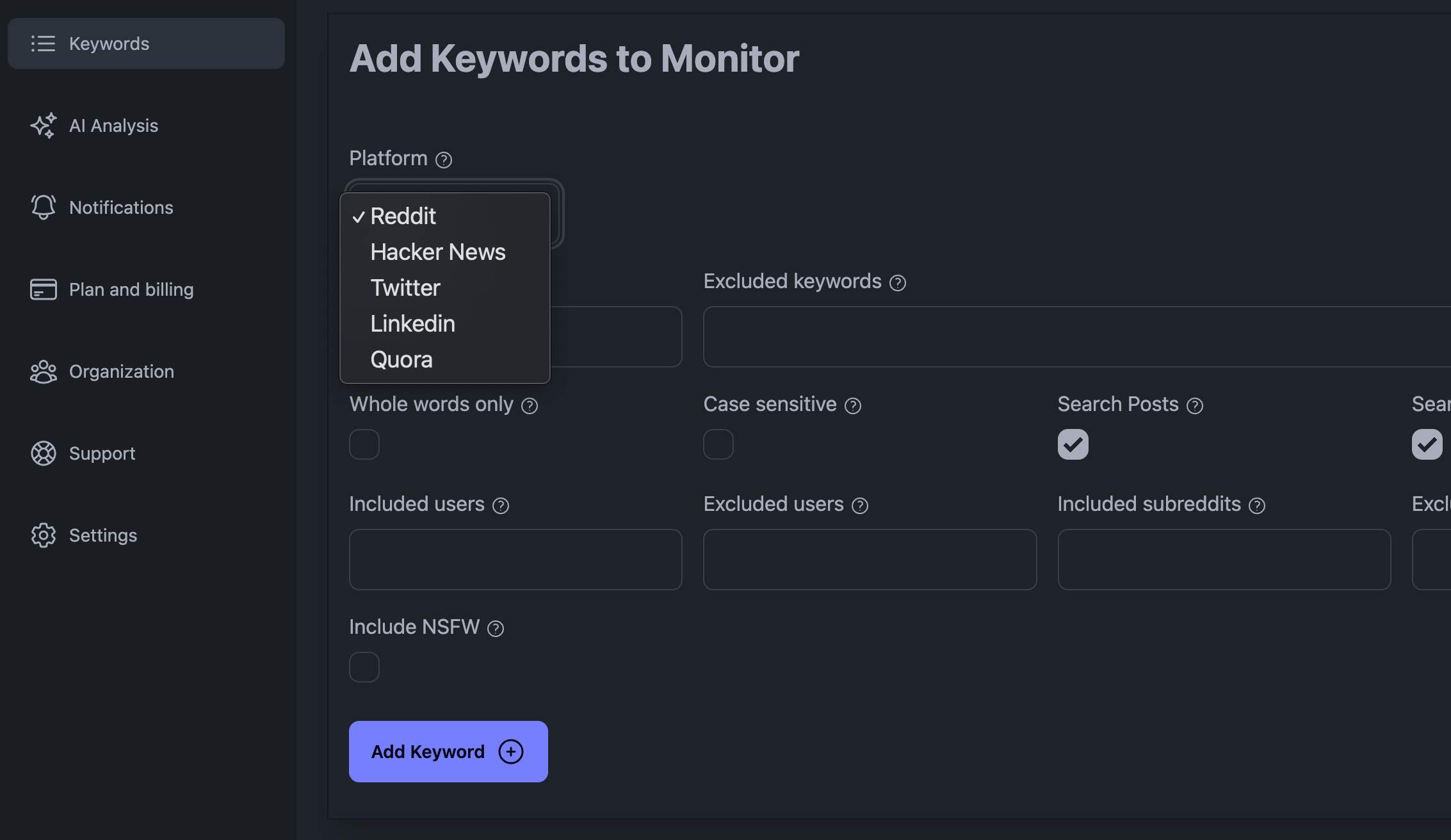
This is the job KWatch.io does. It monitors Reddit, Hacker News, X (Twitter), Linkedin,
Facebook, and Youtube for the keywords you register, and a matching post or comment lands in your dashboard
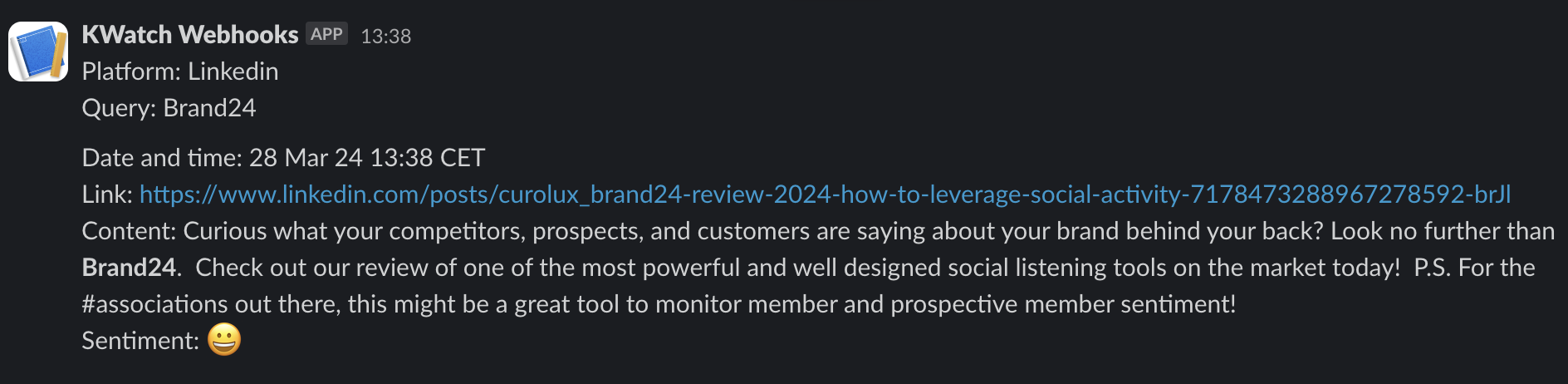
within seconds. Alerts reach you by email or in Slack, and a JSON webhook can push each mention into your CRM
or into automation tools like Zapier and n8n. The comments you write in those threads become part of the
public record that the next round of models trains on, so every conversation you catch early is a small
deposit into future AI answers.
Keyword alerts in the KWatch.io dashboard
For GEO, four keyword families earn their keep:
Your brand name. Wrong descriptions and stale pricing complaints spread into training
data when nobody answers them, so catch them while the thread is young.
Competitor names, plus phrases like "alternative to [competitor]". These threads are
where shortlists get written.
Buying questions in your category: "best [category] tool", "what do you use for
[problem]", "is [category] worth paying for".
The pain points you solve, phrased the way customers phrase them, which you refine as
real mentions come in.
Every mention carries an AI sentiment score, which makes it easy to pull up, say, the
negative comments about a competitor, where a calm and helpful reply from you tends to land well.
Conversation tracking covers the threads that keep paying. Some comparison threads rank on
Google for years and get swept up again with every crawl. Track one, and KWatch.io notifies you whenever a new
comment appears in it, so your answer stays current in a thread that buyers and training pipelines keep
returning to. Learn
more about conversation tracking on Reddit and Hacker News.
Moderators decide whether any of this reaches a crawler. Reddit removes promotional spam
within minutes, and a removed comment disappears from the page and from every future crawl of it.
The comments that stay up share a shape. They answer the actual question, in the tone of the
thread, with the kind of detail only someone close to the product would know, and they disclose that the
author built the thing. Readers upvote that sort of honesty and moderators leave it alone, which matters
because upvoted comments sit at the top of the page, where crawlers give them the most weight.
Comments like this one end up in AI training data
Start participating before you need the account, and keep links rare compared to plain
helpful replies. Platforms that suspect self-promotion hide your posts without telling you; we wrote a full
guide on how
to know if you have been shadowbanned and how to avoid it.
When the Results Show Up
Citations in live AI search respond within weeks. A page or a thread that Perplexity starts
quoting sends visitors your analytics will show under referrers like chatgpt.com and perplexity.ai.
The models themselves move more slowly, because what you post this quarter gets crawled over
the following months and surfaces in whatever ships after that. The effect builds quietly, then appears all at
once with a new release. Competitors who began a year ago already live inside today's weights, and the
mentions you plant now catch up on the same schedule.
Keep a log. Each month, put your ten most important buying questions to the big engines and
paste every answer into a spreadsheet. Note which products get named and how yours gets described. After a few
months the drift becomes obvious, and the citations in AI search answers tell you which threads are doing the
work.
Frequently asked questions
What is Generative Engine Optimization (GEO)?
GEO is everything you do so that generative AI models such as ChatGPT, Claude, Gemini,
and Grok describe your product accurately and mention it when users ask for recommendations in
your category. It covers what models learn during training as well as what AI search engines
cite at question time.
How is GEO different from classic SEO?
A search engine ranks your page among ten links. A generative engine writes one answer
and names a few products, based on what it read during training and what it retrieves live.
Community discussions weigh heavily in both routes, so much of GEO happens away from your own
website.
Do Reddit comments influence what ChatGPT and
Gemini say?
Yes. Reddit licensed its content to Google and OpenAI in 2024, and Reddit threads are
among the most cited sources in AI search answers. A well-received comment in a relevant
thread reaches today's readers and gets absorbed by tomorrow's models.
How long does GEO take to show results?
Citations in live AI search can appear within weeks and bring measurable referral
traffic. Mentions baked into model weights follow the training calendar, so expect several
months before a new model picks up your work.
Which platforms matter most for GEO?
Reddit carries the most weight for product recommendations, with Hacker News close behind
for developer tools. Youtube transcripts, X posts, Linkedin discussions, and Quora answers
feed training corpora too. The right mix depends on where your buyers ask their questions.
How does KWatch.io help with GEO?
KWatch.io monitors Reddit, Hacker News, X, Linkedin, Facebook, and Youtube for your
keywords in real time, so you can join buying conversations while they are fresh. The comments
you write in those threads later enter the datasets that generative models train on, and
KWatch.io also alerts you when your brand gets described incorrectly so you can respond.
Should I automate or mass-post comments for GEO?
That backfires. Moderators remove spam within minutes, and removed content never enters a
crawl. Platforms also shadowban accounts that repeat themselves. One thoughtful comment in the
right thread outperforms fifty pasted ones.
Conclusion
Buying advice is moving into chat windows, and the models compose it from public
conversations happening right now on Reddit, Hacker News, X, and the other large platforms. Show up in those
conversations with useful answers and a consistent story, and the models will learn who you are the same way
your customers do.
The free KWatch.io plan includes keyword alerts on Reddit and Hacker News, the two platforms
where most AI training conversations happen, so you can start listening today: register on KWatch.io here. The details of
every plan are on our pricing page.
 KWatch.io